Nietzsche and Eternal Recurrence by Bevis E. McNeil
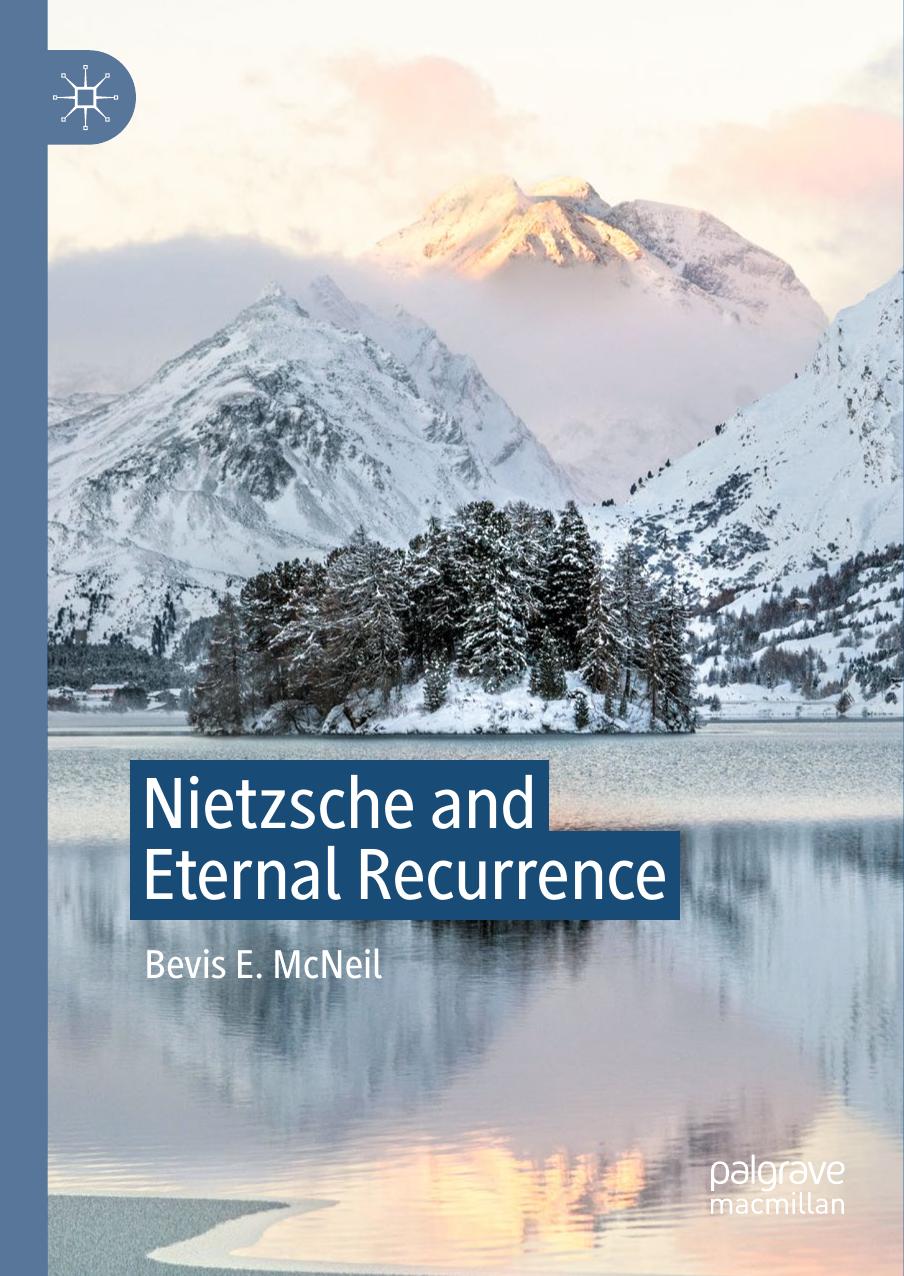
Author:Bevis E. McNeil
Language: eng
Format: epub, pdf
ISBN: 9783030552961
Publisher: Springer International Publishing
2.4.5 Cosmologies of Eternal Recurrence, Thermodynamics and the Conservation of Energy
Long argues that the Stoic cosmology is âa system in which the basic model for understanding all natural processes is drawn from the vital functions of living beings. The heat or energy which accounts for their life is assumed to be only one manifestation of a cosmic heat or energy, endowed with intelligence and supreme organising power.â253 So the ââdesigning fireâ is the vital principle in living things, and [it is the sustaining power] throughout all natureâ¦Since god and matter are everlasting and always conjoined, the universe never ceases to possess vital heat.â254 This is because energy is conserved in the process, just as it is in Nietzscheâs cosmological doctrine of eternal recurrence.
However, although there was evidence of Platonic precedents to the Stoicsâ biologically-orientated cosmology, it was the Stoics who, through being inspired by Heraclitus, turned âvital heat or fire into a principle which is far closer to elementary thermodynamics than to anything resembling a fire that burnsâ, where there is a continuous transformation of heat and the conservation of energy.255 This notion of heat continuously changing and transforming, and of the infinite process of cosmos formation and its destruction eternally repeating itself, was strongly influenced by Heraclitus and has similarities to Nietzscheâs unique interpretation of Dionysianism â which promotes a continuous cycle of life and death and of procreation and destruction â with energy being conserved in the process.
The physics of Stoic cosmology, by focusing on rigorously balanced transformations, âsuggests something analogous to the conservation of energyâ taking place, which has favourable comparisons with both Heraclitusâ and Nietzscheâs cosmologies of recurrence.256 Energy is conserved and recycled in the endless process of cosmos formation and conflagration. We can relate the âthermodynamicâ aspects of the Stoicsâ cosmologies to the process of conflagration. The conflagration is âan essential component of the Stoicsâ conception of material transformations. More specifically, the Stoics argued that there must come a time when celestial fire, which feeds off terrestrial moisture, will dry up and consume the earth.â257
Long explains that âThis process leads to a vast expansion of the world, with gravitational attractionsâ¦being relaxed, and void space outside the world coming to be occupied.â258 There is vast diffusion of âpure energyâ â similar to what Nietzsche calls âcentres of forceâ.259 This is reflected in âChrysippusâ suggestion that the state of things at the conflagration is incandescent, a change into light.â260 As Philo of Alexandria observes:At the conflagration the worldâ¦must either change into flame, as Cleanthes thought, or into light, as Chrysippus supposed.261
Download
Nietzsche and Eternal Recurrence by Bevis E. McNeil.pdf
This site does not store any files on its server. We only index and link to content provided by other sites. Please contact the content providers to delete copyright contents if any and email us, we'll remove relevant links or contents immediately.
| Anthropology | Archaeology |
| Philosophy | Politics & Government |
| Social Sciences | Sociology |
| Women's Studies |
The remains of the day by Kazuo Ishiguro(9081)
Tools of Titans by Timothy Ferriss(8490)
Giovanni's Room by James Baldwin(7432)
The Black Swan by Nassim Nicholas Taleb(7193)
Inner Engineering: A Yogi's Guide to Joy by Sadhguru(6835)
The Way of Zen by Alan W. Watts(6669)
The Power of Now: A Guide to Spiritual Enlightenment by Eckhart Tolle(5854)
Asking the Right Questions: A Guide to Critical Thinking by M. Neil Browne & Stuart M. Keeley(5831)
The Six Wives Of Henry VIII (WOMEN IN HISTORY) by Fraser Antonia(5557)
Astrophysics for People in a Hurry by Neil DeGrasse Tyson(5224)
Housekeeping by Marilynne Robinson(4502)
Double Down (Diary of a Wimpy Kid Book 11) by Jeff Kinney(4332)
12 Rules for Life by Jordan B. Peterson(4331)
Ikigai by Héctor García & Francesc Miralles(4310)
The Ethical Slut by Janet W. Hardy(4307)
Skin in the Game by Nassim Nicholas Taleb(4305)
The Art of Happiness by The Dalai Lama(4167)
Skin in the Game: Hidden Asymmetries in Daily Life by Nassim Nicholas Taleb(4050)
Walking by Henry David Thoreau(3998)
